

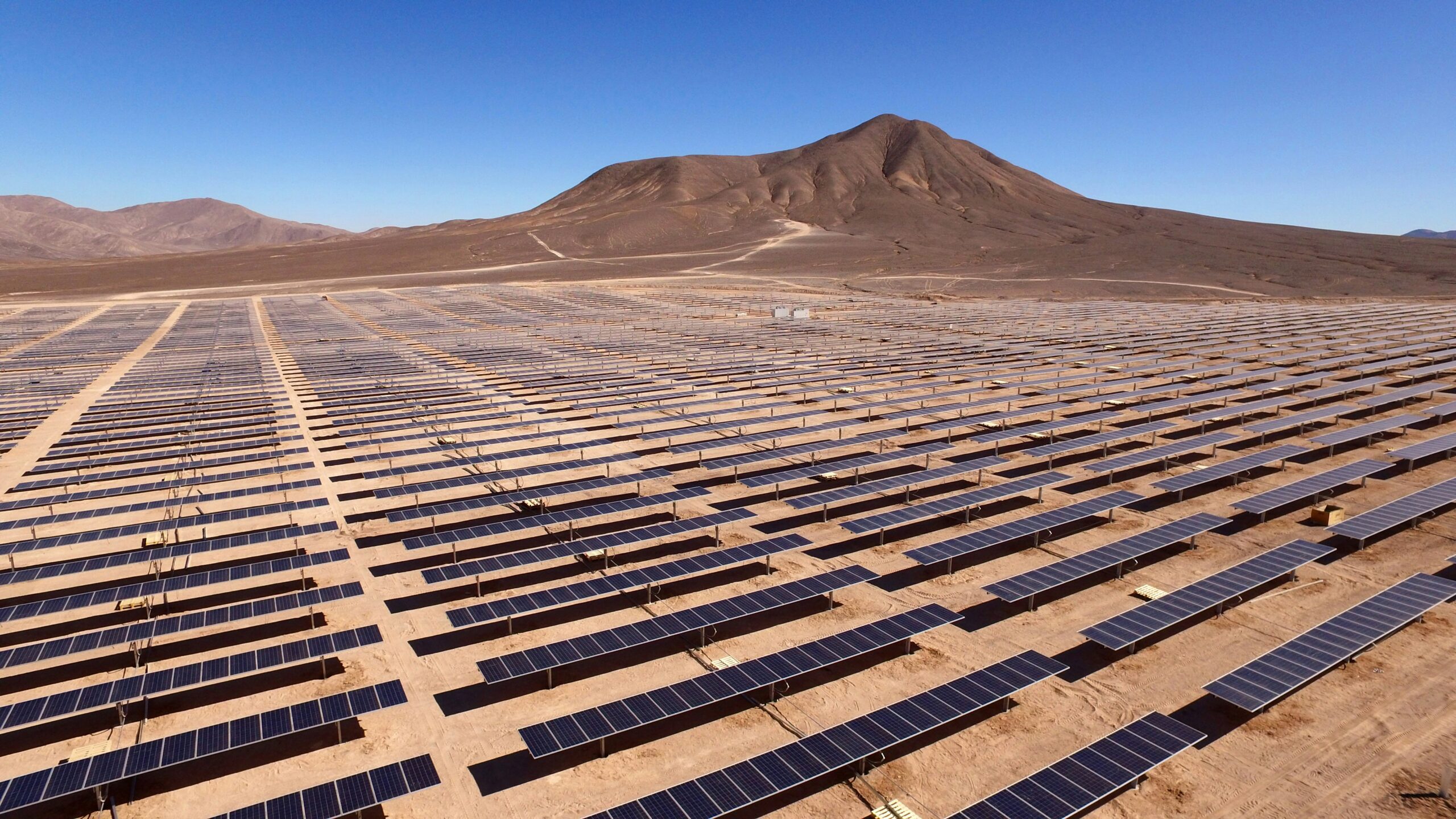
The solar on Brazilian roofs that nobody declared
More than 3.6 million solar systems now sit on Brazilian roofs, façades and small plots, most of them on houses.1 More than half of financing requests for these systems come from consumer classes C and D, so this is ordinary household economics rather than a niche for wealthy owners.2 A large share of that fleet is registered, connected under the rules and visible to the people who run the grid. Another share is not, and it is growing.
The Brazilian term for it is gato solar, from the older word for an illegal hook up to the grid, and it sounds more dramatic than most of the cases are. A household installs an approved system at one capacity, then extends it: more panels along the roof, a larger inverter, an array that grew over two or three years without anyone telling the distributor. Some systems were never declared at all. The regulator, ANEEL, opened a public consultation this year on auditing and penalising exactly this, and its director general described unauthorised changes to installed capacity as a matter for the police.3 Underneath that language sit ordinary rooftop systems that outgrew their paperwork.
Why undeclared rooftop capacity destabilises a grid
Rooftop systems are licensed by the local distributor rather than coordinated centrally, so even the declared ones reach the national operator as an aggregate rather than as individual connections. The undeclared ones do not reach it at all. Both effects run in the same direction, and the operator ends up balancing a system in which a slice of the generation is missing from the picture.
At national level that shows up as curtailment. When more power arrives than the network can safely carry, the operator orders wind and solar plants to reduce output, and it can only order the large centralised plants it controls, since the rooftops are beyond its reach. Curtailment at Brazilian solar plants averaged around a quarter of potential output in June 2026, roughly double the level of a year earlier, and developers have paused billions of dollars of planned capacity as a result. The rooftops causing part of the oversupply are not the ones that get cut.
At street level the effects are more direct. Low voltage feeders were built to carry power in one direction, from the substation out to homes, and rooftop generation pushes it back the other way. Undeclared capacity shows up as overvoltage, as imbalance between phases, and as headroom figures that overstate what a feeder can still absorb, so the next connection application gets approved onto a line already at its limit. The instability sits at both ends, in a national balance the operator cannot strike and in local networks carrying more than their planners recorded. The estimates of how much undeclared capacity is out there run to as much as 14 gigawatts, which is around the size of the country’s largest hydroelectric plant.4 The bodies producing those estimates say the analysis needs further work, which is itself the point: the quantity is large enough to matter to every planning decision and nobody can say where it physically is.
Finding it without punishing the wrong people
Brazil’s response so far has been inspection, and distributors have run campaigns through this year. Where a connection is flagged and visited, an irregularity is usually there, but the capacity confirmed that way amounts to a rounding error against the estimates. A country with tens of millions of connection points cannot inspect its way to an answer when each visit costs a technician a morning.
Proof is the second obstacle. Establishing that a system was expanded beyond its approved capacity is hard to do with legal certainty where there is no access to the inverter and no measurement of what the panels actually produce, which describes most residential installations in the country.
There is a further risk in going harder rather than more precisely. Audits, stricter definitions and simplified connection denials, applied indiscriminately, would catch households and small integrators who installed in good faith under the rules of the day alongside the smaller number who gamed them. The more precisely undeclared capacity can be located, the less enforcement costs the legitimate majority, and the more useful the exercise becomes to the distributors, who need the number whether or not anyone is ever fined.
What the roof shows
A rooftop array is a physical object, visible from above, and its area is a reasonable proxy for its capacity. Overhead imagery is therefore a form of evidence that owes nothing to meters, declarations or inverter access. Comparing what sits on a roof against what is registered for that connection point turns a nationwide search into a ranked list, which is what the inspection programme is missing and what the operator needs for planning.
The work of building those models sits with the distributors’ analytics teams, with the national operator, and with the Earth observation and consulting firms they contract. All of them meet the same obstacle at the same point, which is the training data.
Why detection models fail on a Brazilian house
Detecting panels in satellite or aerial imagery is a well studied computer vision task, and published models report accuracies that look conclusive. They report them on the regions they were trained on. The largest open training set for rooftop photovoltaic detection is concentrated in France and its neighbours, so a model built on it has learned steep slate and tile roofs on regular plots, photographed by European survey programmes at consistent quality. Brazilian housing is a different subject: fibre cement sheet, ceramic tile, corrugated metal and flat concrete slabs, smaller roofs, denser and less regular streets, and informal settlements that appear in no survey.
Two things compound it. Solar thermal water heaters, which use the sun to heat water rather than to generate electricity, have been common on Brazilian roofs for decades, and from above they present as dark rectangular panels, the same signature a detection model has learned to call photovoltaic. Every one counted wrongly inflates a figure meant to correct an estimate. And cloud takes a large share of optical acquisitions across the north and the coast, where rooftop solar is growing fastest.
There is also a harder requirement hiding in the Brazilian case. Most undeclared capacity comes from systems approved at one size and then extended, so the question is how many kilowatts sit on a roof rather than whether a roof has panels at all. A model has to estimate array area accurately enough to compare against a registered figure, which is a stricter task than detection and needs examples that vary array size systematically across the same roof types.
The advantage of synthetic data
Correcting any of this the conventional way means labelling Brazilian imagery, someone tracing arrays by hand, roof by roof and city by city, then repeating the exercise for every new sensor. That is the cost these projects are trying to avoid, and it is why nobody has built the dataset yet.
Generated scenes arrive with their labels already attached, and they can be specified. Brazilian roof materials, roof geometries, plot sizes and street patterns can be built into the scenes before a single real image has been annotated. Solar thermal collectors can be placed deliberately beside photovoltaic arrays on the same kinds of roof, in the quantities needed to teach a model the difference. Array size can be varied across identical roofs, which is what teaches a model to read capacity rather than presence. And the same scene can be rendered clear and then under cloud of a chosen type and density, which supplies the paired examples the tropics never produce naturally.
A team receives scenes with array footprints marked to the pixel, across the roof stock they will actually be pointed at, in the volume the task needs, and it builds the training set without processing imagery of anyone’s home. Real imagery stays in the loop for calibration and for checking that the generated scenes hold up against Brazilian acquisitions from the same sensors.
What better visibility makes possible
None of this replaces the regulatory and engineering work Brazil has ahead of it: storage incentives, faster transmission build out, clearer compensation rules for curtailed generators, and better coordination at distribution level. Knowing which roofs carry how much generation makes each of those easier to design and to target, and it lets enforcement, where it happens, fall on the cases that warrant it.
Brazil does not have to choose between more rooftop solar and a stable grid. It needs to see what is already on its roofs clearly enough to keep expanding both, so that the next phase of the transition is planned rather than discovered after the fact. Supplying the training data that makes that visibility possible is the part of the problem we are working on.
Another Earth generates high-resolution synthetic Earth observation data, designed to train and test the AI models used across environmental, infrastructure and climate work. Our aim is to help organisations move from reacting to what has already happened towards anticipating what comes next, by building the predictive data layer for the physical world.
- https://www.canalenergia.com.br/noticias/53313624/geracao-propria-solar-alcanca-40-gw-aponta-absolar ↩︎
- https://canalsolar.com.br/classe-c-45-pedidos-financiamentos-gd/ ↩︎
- https://canalsolar.com.br/gato-solar-e-desafio-regulatorio/ ↩︎
- https://agenciainfra.com/blog/aneel-inspecao-de-distribuidoras-encontra-88-mw-de-gato-solar/ ↩︎



Leave a Reply