
The EUDR is rewriting global supply chains
Demands, challenges and potential of the EU’s ambitious anti-deforestation measure
The European Union Deforestation Regulation (EUDR) mandates all companies importing or exporting the seven main drivers of deforestation to prove their goods have not contributed to forest loss anywhere on Earth. This requires a level of supply chain visibility most businesses have never built, and a quality of geospatial data that does not yet exist at scale.
What is the EUDR?
The European Union Deforestation Regulation, or EUDR, is the most ambitious demand-side anti-deforestation measure any major economy has ever implemented. Its premise is straightforward: if you want to sell certain goods on the EU market, you must prove they did not contribute to deforestation or forest degradation anywhere in the world.
Previous approaches relied on voluntary certification and sustainability aid but proved insufficient against the growing threat of global forest loss. With its new regulation, the EU is turning deforestation into a market access issue, a decisive shift towards a much stricter approach. And for good reason. Because EU consumption alone accounts for roughly 10 percent of global deforestation, and the goods driving that destruction are the same ones that fill shelves and supply chains across Europe every day.
Seven key commodities fuel 50% of the world’s deforestation
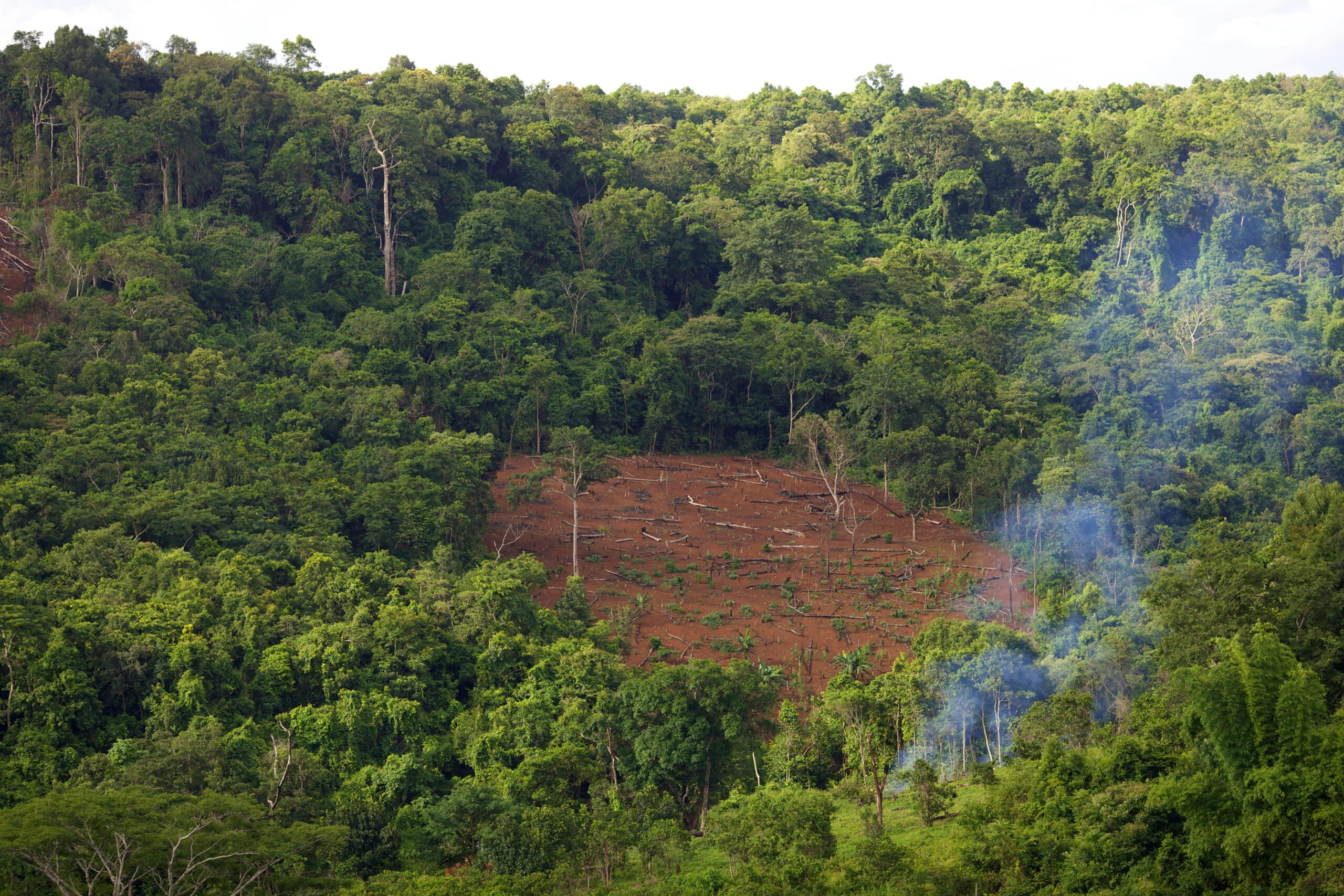
The regulation targets seven commodity groups: cattle, cocoa, palm oil, soy, coffee, rubber, and wood. These commodities together were responsible for over 50 percent of global deforestation between 2001 and 2015 and account for 58 percent of forest loss linked to EU imports.
The scale of impact varies, but the pattern is consistent. Cattle is by far the most destructive and responsible for roughly 45 million hectares of deforestation over that period, concentrated in Brazil’s Amazon and Cerrado regions. Cocoa is a significant contributor as well, having driven the destruction of vast areas of tropical forest, especially in West Africa, where Côte d’Ivoire and Ghana together produce roughly two thirds of the world’s supply and have lost the majority of their forest cover in the process. Palm oil and soy follow, driving major forest losses across Southeast Asia and South America, while coffee and rubber affect some of the planet’s most sensitive biodiversity hotspots
One important detail is often overlooked: the regulation also accounts for indirect deforestation exposure. This means a beef producer whose cattle was fed on soy must document and verify that entire feed chain.
Supply chains built for efficiency need to prioritize transparency
Most global supply chains were built for efficiency. Transparency was a secondary consideration at best. With the EUDR, this is set to change.
The regulation demands a level of supply chain visibility that most companies have never needed to develop and building it will be one of the most operationally demanding compliance challenges many businesses have ever faced.
Between a European chocolate manufacturer and a cocoa farmer in West Africa sits a long chain of cooperatives, local traders, exporters, and processors. The EUDR makes every link in that chain a compliance responsibility. This means, companies must map their supply chains all the way to plot level, to provide not just the country of origin of a commodity, but the GPS coordinates of the exact land on which it was grown. This data must then be cross-referenced against satellite deforestation data and self-certification is not sufficient.
For smallholder supply chains like cocoa, where five million farmers grow roughly 80% of the world’s supply on small plots with no digital footprint, collecting this data will be an enormous task. It will require real field investment, mobile tools and long-term supplier relationships built on trust.
In practice, the EUDR means companies across all affected industries need to significantly upgrade their traceability and transparency infrastructure. They will need to engage cooperatives, processors, and farmers directly, validate geolocation data at source, and file due diligence statements digitally for every shipment entering the EU market.
The tools needed to make compliance possible
Verifying the deforestation status of the land behind every shipment is not something that can be done manually. This is where Earth observation data becomes essential.
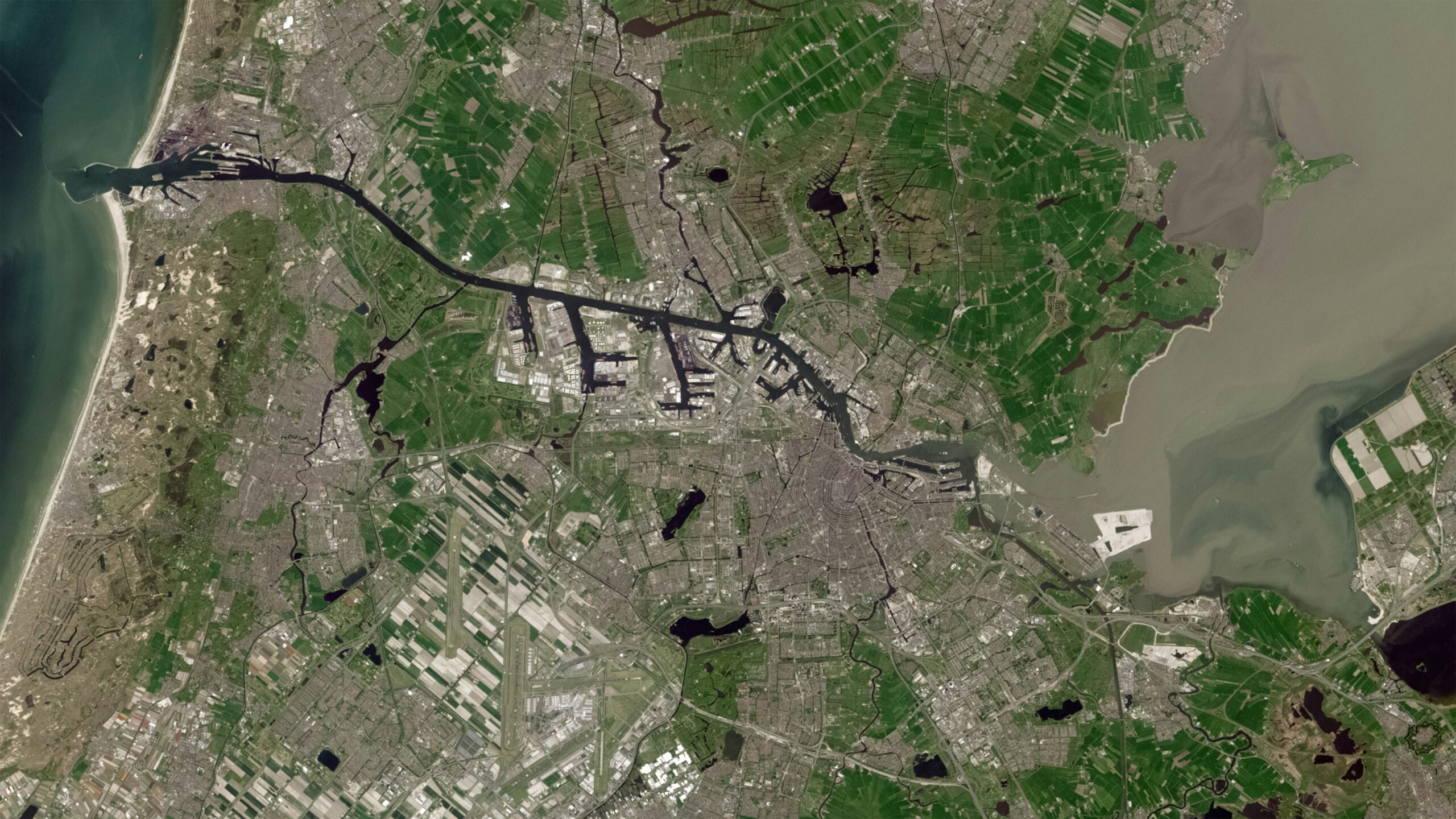
Satellite imagery provides continuous, up-to-date forest cover data across the globe. Combined with machine learning, it allows companies to systematically cross-reference the geolocations of their supply plots against historical and current forest cover. Without this capability, the plot-level traceability the EUDR demands would simply not be feasible for global supply chains operating across millions of hectares and hundreds of thousands of individual plots.
The data gap challenge
There is a significant gap between what the EUDR demands and what current Earth Observation data can reliably deliver.
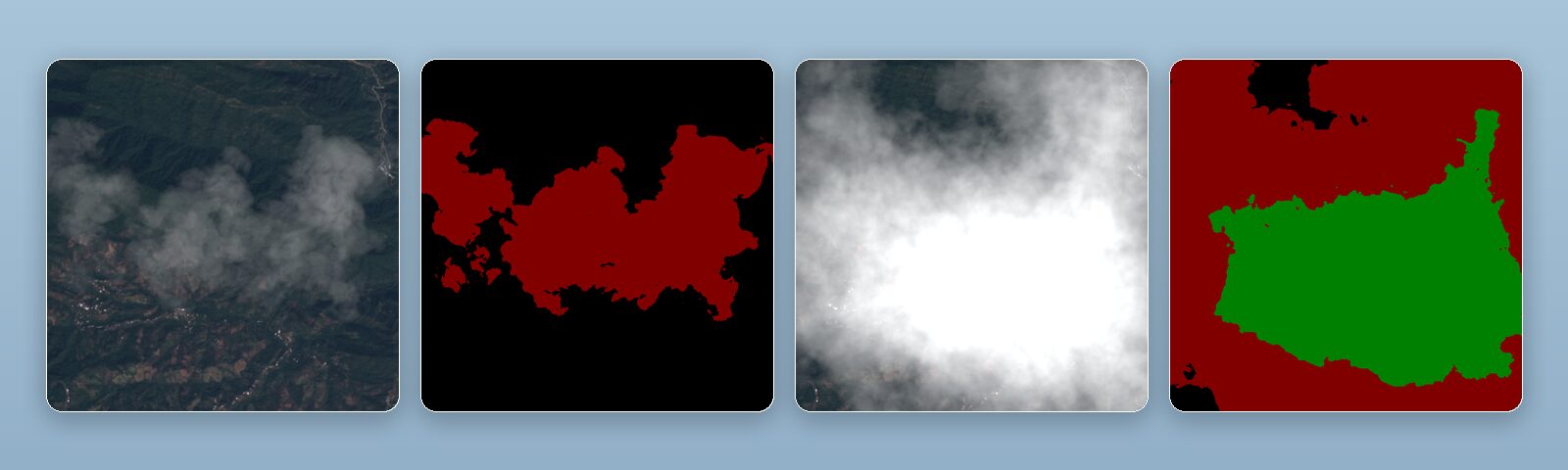
Cloud cover limits optical satellite coverage in tropical regions, the exact areas where the most sensitive supply chains originate. But the more significant challenge is that the conditions driving agriculture-linked forest loss are not static. Compound threats that accelerate deforestation are moving in ways that historical data has rarely, if ever, captured. Droughts and broader climate risks are shifting, fire seasons are lengthening and appearing in regions with no historical precedent. A region classified as low-risk based on historical satellite records can shift rapidly under new climate conditions that those records never captured.
This is the core problem: historical data is effective at predicting the future when the future resembles the past. And for decades this was true. But shifting climate projections and intensifying compound stressors are overwriting the very patterns that once made historical data reliable. When the underlying conditions change, past patterns lose their predictive value precisely when prediction matters most. For a regulation designed to prevent future deforestation, data that extracts information from a stable past is no longer sufficient.
Closing the gap with synthetic data
All models need training data to predict outcomes and simulate possibilities. When that data does not exist for a given scenario, it has to be created. That is the principle behind synthetic satellite data, and it is the most direct answer to the EUDR’s data gap.
Synthetic satellite data is visually identical to real-world imagery but can be generated on demand for any region, any surface, and any condition required. This means AI models no longer need to rely solely on what historical data can show. They can be trained on simulations of the scenarios that are emerging now and of those that have not yet occurred but are becoming increasingly likely. This is giving them the ability to detect early signatures of deforestation risk that no existing dataset has ever captured.
It also addresses the practical monitoring constraints like cloud cover, sensor limitations, and infrequent revisit rates, that leave blind spots in the tropical regions where compliance verification matters most.
For companies that invest properly in this monitoring infrastructure, the value extends well beyond meeting the regulation. The same systems, geolocation data, and predictive models built for EUDR compliance also expose climate risk, supply chain inefficiencies, geopolitical disruption and price volatility.
If approached with the right tools, the EUDR’s compliance challenge can become a foundation for smarter, more resilient and future-proof business operations.

Leave a Reply