

From 2025 to 2026: Navigating the EUDR Delay
🎄The holiday season is here, and cocoa demand is booming. But something else besides Christmas has kept the industry busy:
⏳the EU’s #EUDR rules, originally set to take effect on December 30th, 2025.
It’s bittersweet news, though unsurprising to many, that the EUDR deadline has been postponed a second time: to December 30th 2026 for medium and large operators and June 2027 for small companies.
On one hand ,this is yet another delay in enforcing more sustainable agricultural production aimed at easing pressure on the world’s forests. With agriculture driving global deforestation and accounting for nearly 90% of forest loss, the importance of such regulations, challenging as they are, is clear.
On the other hand, the EUDR presents enormous challenges for companies, requiring significant restructuring to make supply chains fully deforestation-free.
This second postponement shouldn’t be seen as a chance to delay action, but as an opportunity to properly prepare, by implementing strong technological solutions that provide the insights needed to comply with the EUDR by the end of 2026.
Cocoa and Deforestation
Cocoa carries an intricate deforestation risk. The small bean grows best in shaded or formerly forested areas, which historically contributed to forest loss. Newer sun-intensive monoculture practices have been even more harmful, as farmers often clear wide stretches of land, degrading soil health and, under economic pressure, continuing to expand.
Additionally, the cocoa supply chain is long and complex: 90% of production comes from smallholder farmers and passes through multiple intermediaries which results in large amounts of inconsistent or missing farm-level data.
So the challenge within the industry is obvious:
➡️Achieving full traceability, despite the extra year, remains difficult.
Compliance requirements
📝Under the EUDR, companies will need to:
- Prove no cocoa comes from land deforested after 31 December 2020
- Provide geolocation polygons for every cocoa plot
- Ensure full traceability from farm to final product
- Conduct and document risk assessments and mitigation
As 2025 has shown, a year passes quickly. Many companies have not implemented necessary measures in time.
🔧To make progress before the next deadline, companies will require solutions that:
- Accurately map and register farms
- Detect past and ongoing land-use change
- Track cocoa across every supply-chain layer
- Manage all EUDR compliance reporting.
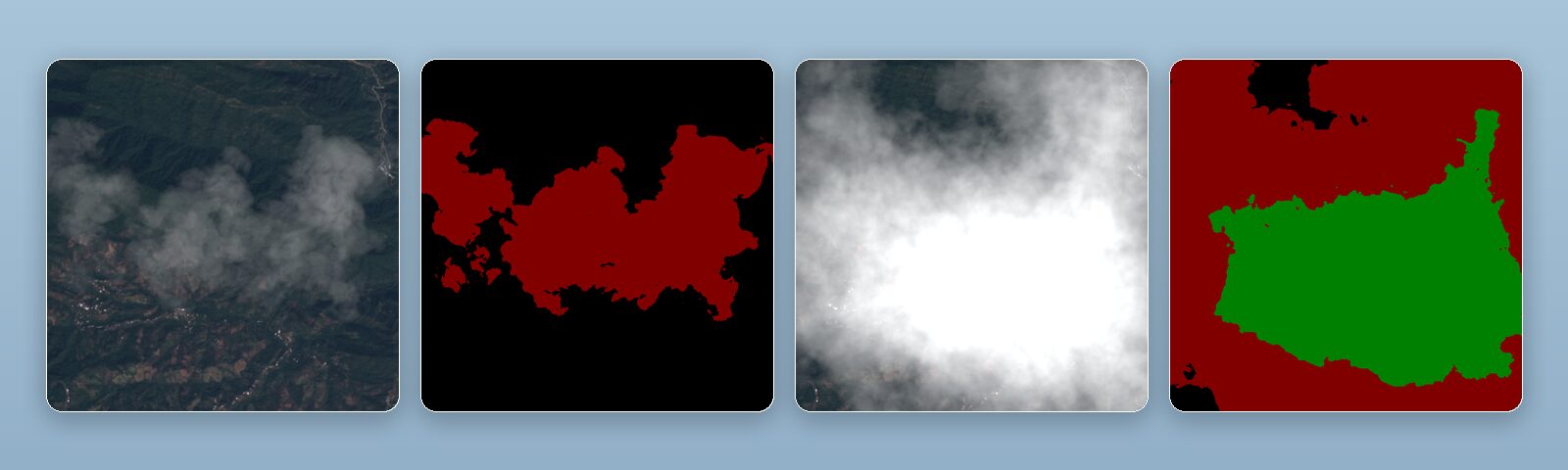
Tools capable of providing these insights accurately must be trained on adequate amounts of high-quality, consistent and unbiased data. Robust deforestation-monitoring and risk detection models can only perform as well as the data behind them.
Taking the challenge as an opportunity
Creating this type of training data is a challenge we have been focused on for some time. By developing synthetic datasets we strengthen models monitoring trees, detecting deforestation, and assessing land-use dynamics around cocoa production, especially in areas with limited or inconsistent satellite imagery.
Despite their pressure, EUDR regulations bring real value for everyone involved in the industry. By ensuring deforestation-free cocoa production, they push the industry towards adapting new perspectives and adopting more innovative practices, thereby creating a more resilient and sustainable production base. 🌳🤝🍫
#SyntheticData #Geospatial #Tech4Good #Deforestation #Biodiversity

Leave a Reply